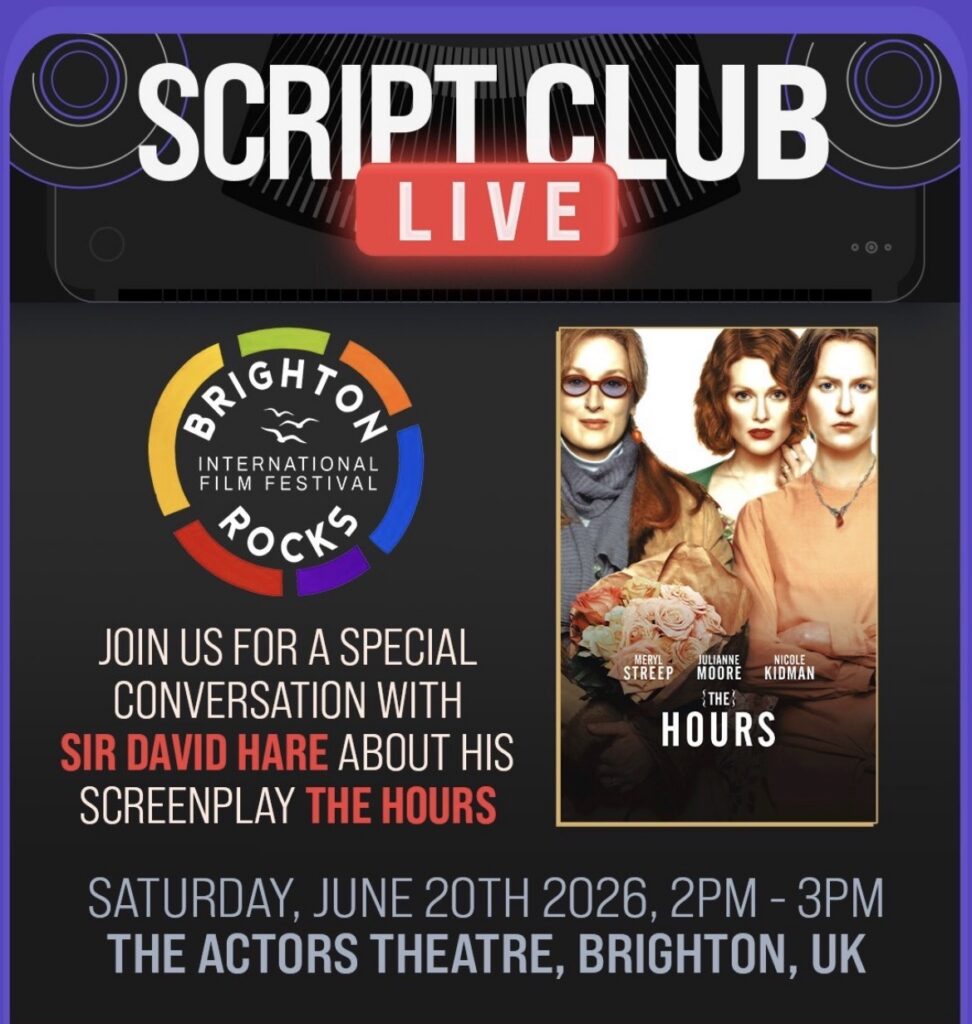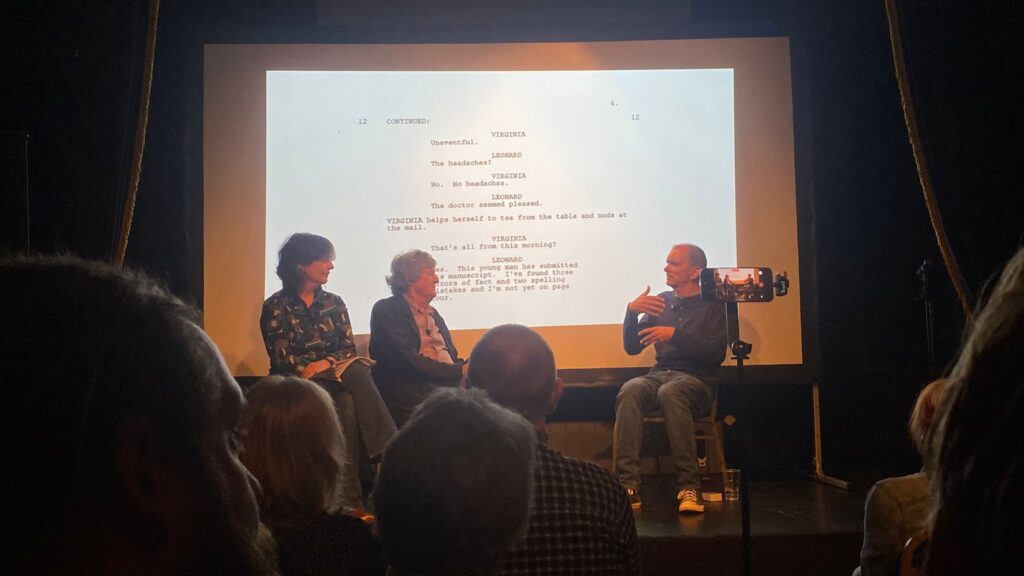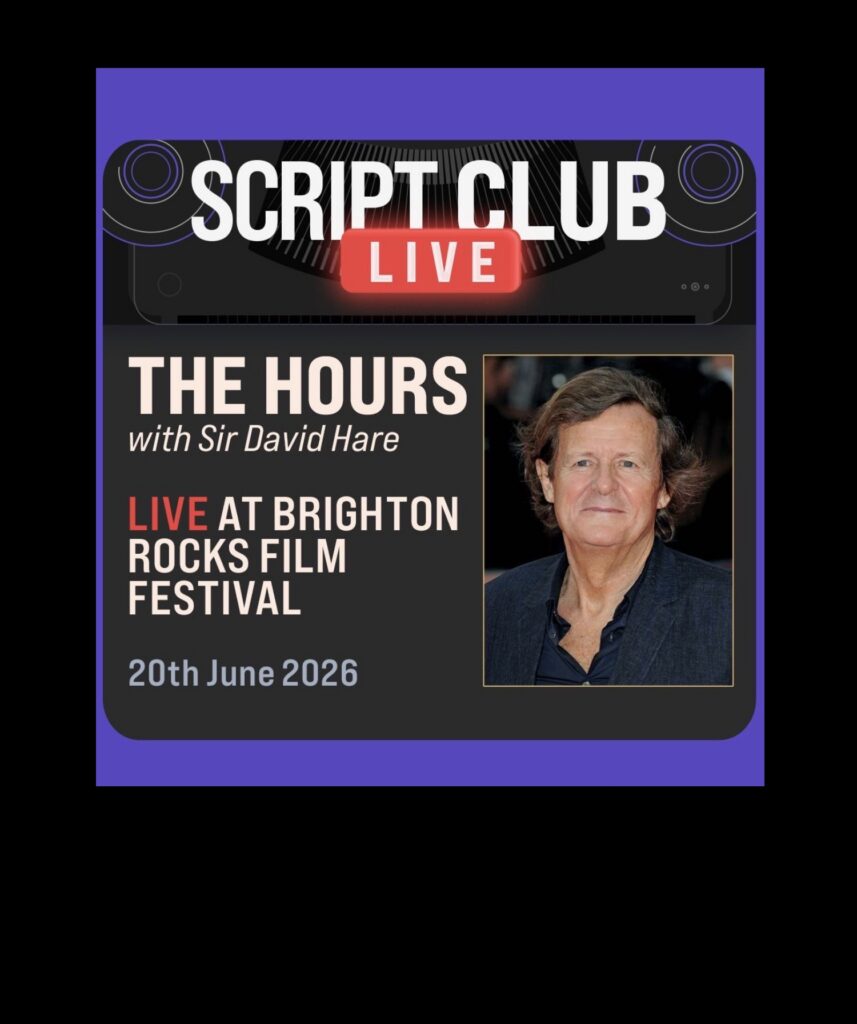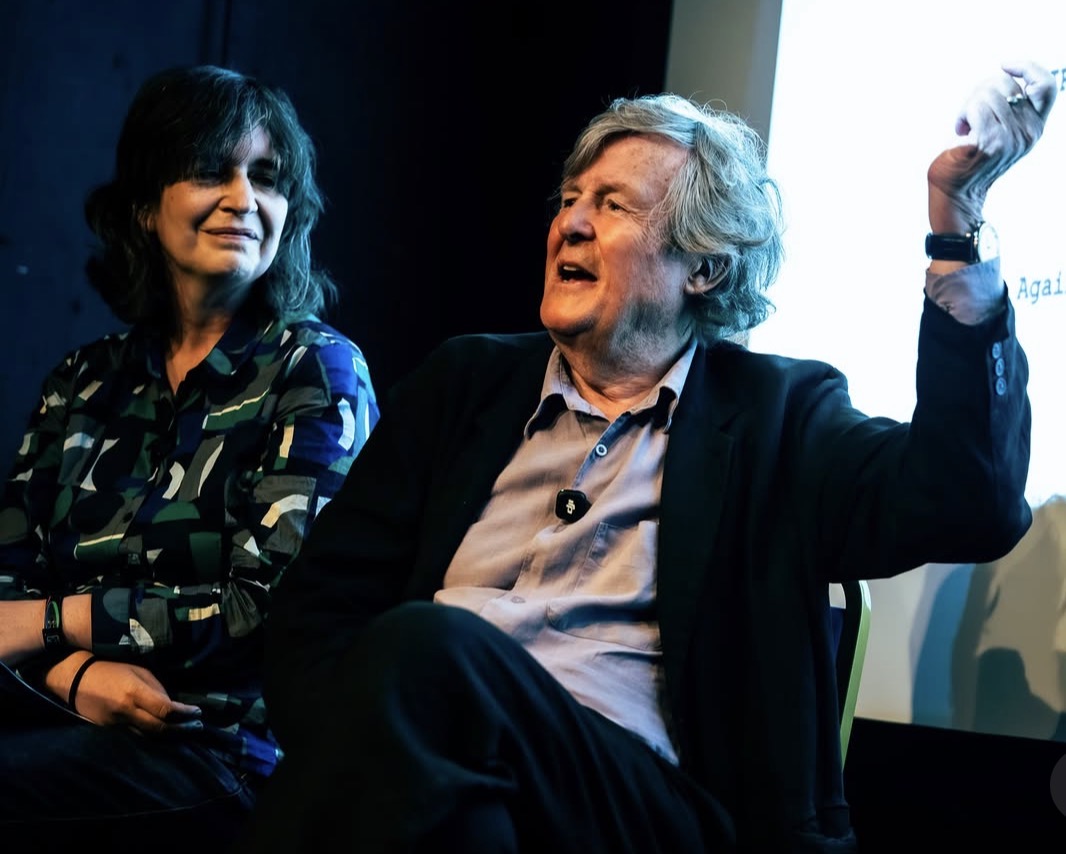
I greatly enjoyed appearing as the guest panellist at the CenterFrame Script Club, hosted by Luke Foster, when Sir David Hare joined the club live at the Actors Theatre in Brighton. Held as part of Brighton Rocks Film Festival 2026, the discussion focused on an in-depth analysis of the Oscar-nominated screenplay for The Hours, based on the novel by Michael Cunningham, which was in turn inspired by Virginia Woolf’s Mrs. Dalloway. Going on to star Nicole Kidman, Meryl Streep and Julianne Moore, the film has an intriguing structure to encompass three timelines, creatively linking the stories of the main characters. It was a while since I had seen The Hours, which was released in 2002, giving me the opportunity to follow its evolution by reading the book and the screenplay, before re-watching the film with a new appreciation.
As a lively and engaging speaker, Sir David gave an insight into the writing process that was inspiring for screenwriters, while also fascinating for audiences of the film. He revealed that the book was considered tricky to adapt, as the narrative is largely told through the interior world of its characters, who are separated in time and space. In fact, he found the process comparatively easy and enjoyable. When reading the screenplay, it’s clear that he seized on the opportunity of the film medium to bring out powerful aspects of the story, allowing for revelations to be made to the audience in the unfolding drama between the characters, rather than directly explained to them as in the novel. However, Sir David said that his method of adaptation was sometimes questioned, for example his opening sequence that links scenes in different times, which proved to be an emotionally engaging and efficient way to introduce the intertwined worlds of The Hours to the audience.
Despite these questions, and the inevitable changes that happen to a screenplay in the film production process, Sir David stated that he had the support and backing of the film’s director Stephen Daldry. The Q&A afterwards touched on the tightrope a screenwriter walks between taking on board ideas for re-writes and knowing when a change is detrimental to the work. He agreed with an audience member who asked if this is intuitive, confirming that his reaction on being required to alter something fundamental to the script is an almost visceral ‘gut feeling’. His observation would seem to confirm that in the creative process, intellectual analysis often comes hand-in-hand with instinct. The act of creation, by definition, brings into being something new, and as it is unestablished, others feel able to question it, so the creator must defend it while remaining open to the collaboration necessary to bring it to an audience.
After the script analysis, Sir David touched on the demise of the 25m dollar art movie (or its equivalent cost today) as a genre, of which The Hours is an enduringly successful example. Such films gave an opportunity to explore topical concerns as part of a national, or international, conversation. Sir David observed that The Hours is also something of a dialogue across time: from Virginia Woolf with the novel Mrs Dalloway, to Michael Cunningham in America finding inspiration from Woolf’s text to write The Hours, through to Sir David, sharing with Woolf a strong connection to Sussex. It’s striking that such an enduring conversation could take place through time and in different genres to culminate in the film, while remaining true to the ideas of the creators. I feel that this success is a testament to the power of film, and a challenge to future film makers and the wider industry.